

Louisville, Kentucky, December 12, 2025
Ford Motor Company has assumed sole ownership of its electric vehicle battery manufacturing plant in Kentucky after ending its joint venture with SK On. This strategic move allows Ford to independently manage battery production for future electric models, particularly the next-generation electric F-Series trucks. The transition includes SK On taking full control of its Tennessee facility, allowing both companies to focus on their strategic objectives in the evolving EV market. This ownership change represents a significant shift in the landscape of EV battery manufacturing.
Louisville, Kentucky – Ford Assumes Full Control of EV Battery Plant Amid Split with SK On
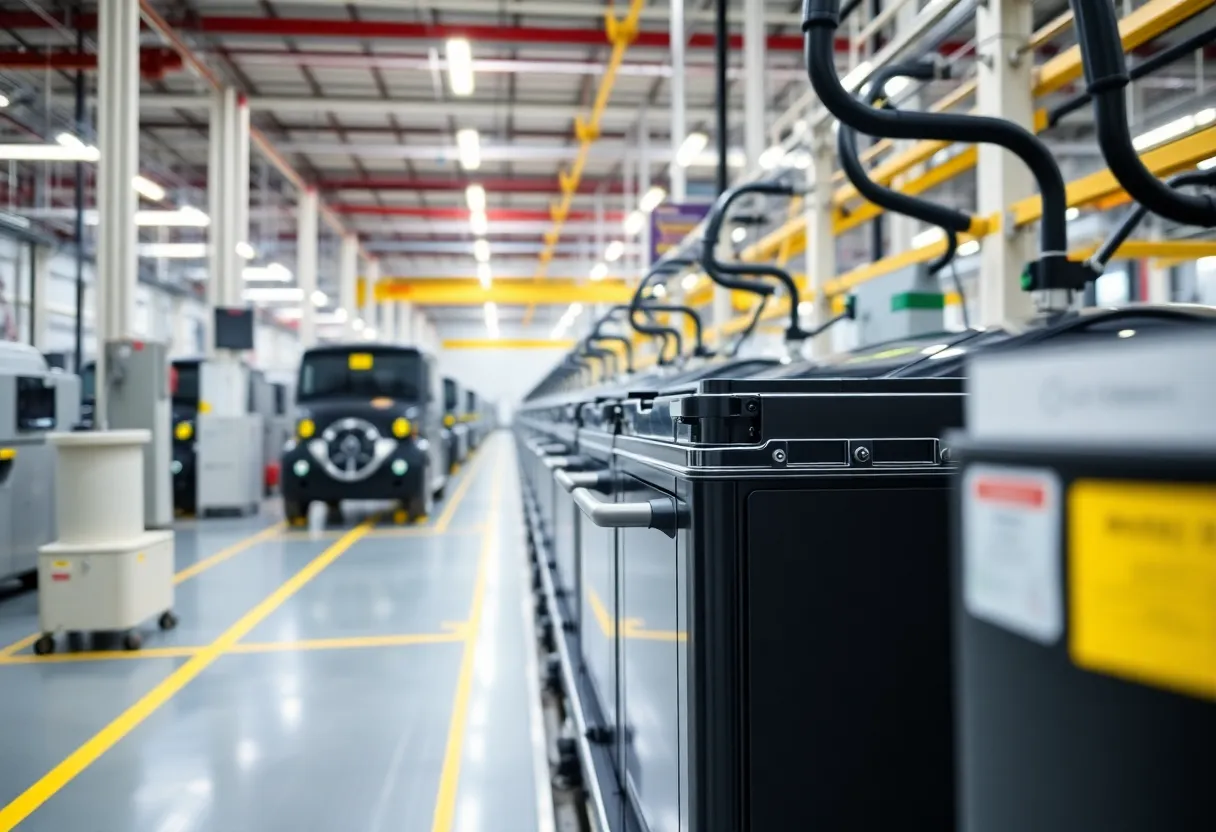
Louisville, Kentucky – Ford Motor Company has taken sole ownership of its electric vehicle (EV) battery manufacturing facility in Kentucky, following the dissolution of its joint venture with South Korea’s SK On. This strategic move allows Ford to independently manage the production of batteries for its upcoming EV models, including the next-generation electric F-Series trucks.
Details of the Ownership Transition
Under the terms of the agreement, a Ford subsidiary will now fully own and operate the battery plants in Kentucky. Concurrently, SK On will assume full ownership and operation of the plant in Tennessee. The transition is expected to be completed by the end of the first quarter of 2026, pending regulatory approvals. This restructuring enables both companies to focus on their respective strategic objectives in the evolving EV market.
Strategic Implications for SK On
For SK On, the decision to end the joint venture aligns with its strategic shift towards energy storage systems (ESS). The company plans to repurpose its Tennessee facility to supply batteries for both EVs and ESS, catering to a broader range of customers. This move is part of SK On’s broader strategy to enhance operational efficiency and respond more effectively to changing market dynamics.
Background on the Joint Venture
In 2022, Ford and SK On established the joint venture, investing $11.4 billion to build battery manufacturing plants in Kentucky and Tennessee. The Kentucky facility began commercial production of EV batteries in August 2025, supplying power for Ford’s all-electric F-150 Lightning pickup truck and the extended-range E-Transit cargo van. The Tennessee plant, located within Ford’s BlueOval City campus, was slated to start operations in 2026. However, the recent restructuring has led to a realignment of these plans, with each company now independently managing their respective facilities.
Industry Context
The dissolution of the joint venture reflects broader industry trends, including a slowdown in EV demand and the loss of U.S. subsidies, prompting South Korean battery makers to reassess their U.S. strategies. Companies like SK On are increasingly focusing on energy storage systems to diversify their product offerings and improve financial stability. This shift is evident as SK On and other manufacturers, such as LG Energy Solution and Samsung SDI, repurpose EV battery production lines to produce energy storage systems, which are used in facilities like data centers.
Ford’s Position in the EV Market
For Ford, assuming full control over the Kentucky battery plant allows the company to streamline its EV production processes and better integrate battery manufacturing with vehicle assembly. This move is expected to enhance Ford’s competitiveness in the rapidly evolving EV market, enabling the company to meet growing consumer demand for electric vehicles more effectively.
Conclusion
The separation between Ford and SK On marks a significant shift in the EV battery manufacturing landscape. Both companies are now positioned to pursue their strategic objectives independently, with Ford focusing on enhancing its EV production capabilities and SK On expanding into the energy storage systems market. The full impact of this restructuring will unfold as both companies implement their respective strategies in the coming years.
Frequently Asked Questions (FAQ)
What is the recent development between Ford and SK On?
Ford Motor Company has taken sole ownership of its electric vehicle (EV) battery manufacturing facility in Kentucky, following the dissolution of its joint venture with South Korea’s SK On. This strategic move allows Ford to independently manage the production of batteries for its upcoming EV models, including the next-generation electric F-Series trucks.
What does this mean for SK On?
For SK On, the decision to end the joint venture aligns with its strategic shift towards energy storage systems (ESS). The company plans to repurpose its Tennessee facility to supply batteries for both EVs and ESS, catering to a broader range of customers. This move is part of SK On’s broader strategy to enhance operational efficiency and respond more effectively to changing market dynamics.
What was the original purpose of the joint venture?
In 2022, Ford and SK On established the joint venture, investing $11.4 billion to build battery manufacturing plants in Kentucky and Tennessee. The Kentucky facility began commercial production of EV batteries in August 2025, supplying power for Ford’s all-electric F-150 Lightning pickup truck and the extended-range E-Transit cargo van. The Tennessee plant, located within Ford’s BlueOval City campus, was slated to start operations in 2026. However, the recent restructuring has led to a realignment of these plans, with each company now independently managing their respective facilities.
Why did the joint venture dissolve?
The dissolution of the joint venture reflects broader industry trends, including a slowdown in EV demand and the loss of U.S. subsidies, prompting South Korean battery makers to reassess their U.S. strategies. Companies like SK On are increasingly focusing on energy storage systems to diversify their product offerings and improve financial stability. This shift is evident as SK On and other manufacturers, such as LG Energy Solution and Samsung SDI, repurpose EV battery production lines to produce energy storage systems, which are used in facilities like data centers.
How does this affect Ford’s position in the EV market?
For Ford, assuming full control over the Kentucky battery plant allows the company to streamline its EV production processes and better integrate battery manufacturing with vehicle assembly. This move is expected to enhance Ford’s competitiveness in the rapidly evolving EV market, enabling the company to meet growing consumer demand for electric vehicles more effectively.
FAQ Schema in JSON-LD Format
{
  "@context": "https://schema.org",
  "@type": "FAQPage",
  "mainEntity": [
    {
      "@type": "Question",
      "name": "What is the recent development between Ford and SK On?",
      "acceptedAnswer": {
        "@type": "Answer",
        "text": "Ford Motor Company has taken sole ownership of its electric vehicle (EV) battery manufacturing facility in Kentucky, following the dissolution of its joint venture with South Korea's SK On. This strategic move allows Ford to independently manage the production of batteries for its upcoming EV models, including the next-generation electric F-Series trucks."
      }
    },
    {
      "@type": "Question",
      "name": "What does this mean for SK On?",
      "acceptedAnswer": {
        "@type": "Answer",
        "text": "For SK On, the decision to end the joint venture aligns with its strategic shift towards energy storage systems (ESS). The company plans to repurpose its Tennessee facility to supply batteries for both EVs and ESS, catering to a broader range of customers. This move is part of SK On's broader strategy to enhance operational efficiency and respond more effectively to changing market dynamics."
      }
    },
    {
      "@type": "Question",
      "name": "What was the original purpose of the joint venture?",
      "acceptedAnswer": {
        "@type": "Answer",
        "text": "In 2022, Ford and SK On established the joint venture, investing $11.4 billion to build battery manufacturing plants in Kentucky and Tennessee. The Kentucky facility began commercial production of EV batteries in August 2025, supplying power for Ford's all-electric F-150 Lightning pickup truck and the extended-range E-Transit cargo van. The Tennessee plant, located within Ford's BlueOval City campus, was slated to start operations in 2026. However, the recent restructuring has led to a realignment of these plans, with each company now independently managing their respective facilities."
      }
    },
    {
      "@type": "Question",
      "name": "Why did the joint venture dissolve?",
      "acceptedAnswer": {
        "@type": "Answer",
        "text": "The dissolution of the joint venture reflects broader industry trends, including a slowdown in EV demand and the loss of U.S. subsidies, prompting South Korean battery makers to reassess their U.S. strategies. Companies like SK On are increasingly focusing on energy storage systems to diversify their product offerings and improve financial stability. This shift is evident as SK On and other manufacturers, such as LG Energy Solution and Samsung SDI, repurpose EV battery production lines to produce energy storage systems, which are used in facilities like data centers."
      }
    },
    {
      "@type": "Question",
      "name": "How does this affect Ford's position in the EV market?",
      "acceptedAnswer": {
        "@type": "Answer",
        "text": "For Ford, assuming full control over the Kentucky battery plant allows the company to streamline its EV production processes and better integrate battery manufacturing with vehicle assembly. This move is expected to enhance Ford's competitiveness in the rapidly evolving EV market, enabling the company to meet growing consumer demand for electric vehicles more effectively."
      }
    }
  ]
}
Key Features of the Event
| Feature | Details |
|---|---|
| Event | Ford assumes full ownership of Kentucky EV battery plant; SK On takes control of Tennessee plant |
| Investment | $11.4 billion joint venture established in 2022 |
| Kentucky Facility | Started commercial production in August 2025; supplies batteries for Ford’s F-150 Lightning and E-Transit |
| Tennessee Facility | Located within Ford’s BlueOval City campus; slated to start operations in 2026 |
| Strategic Shift | SK On focuses on energy storage systems; Ford streamlines EV production |
Deeper Dive: News & Info About This Topic
HERE Resources
Kentucky’s Manufacturing Sector Sees Major Investments
iPhone 17 Pre-Order Deals in Louisville Come with Hidden Fees