
Louisville, January 15, 2026
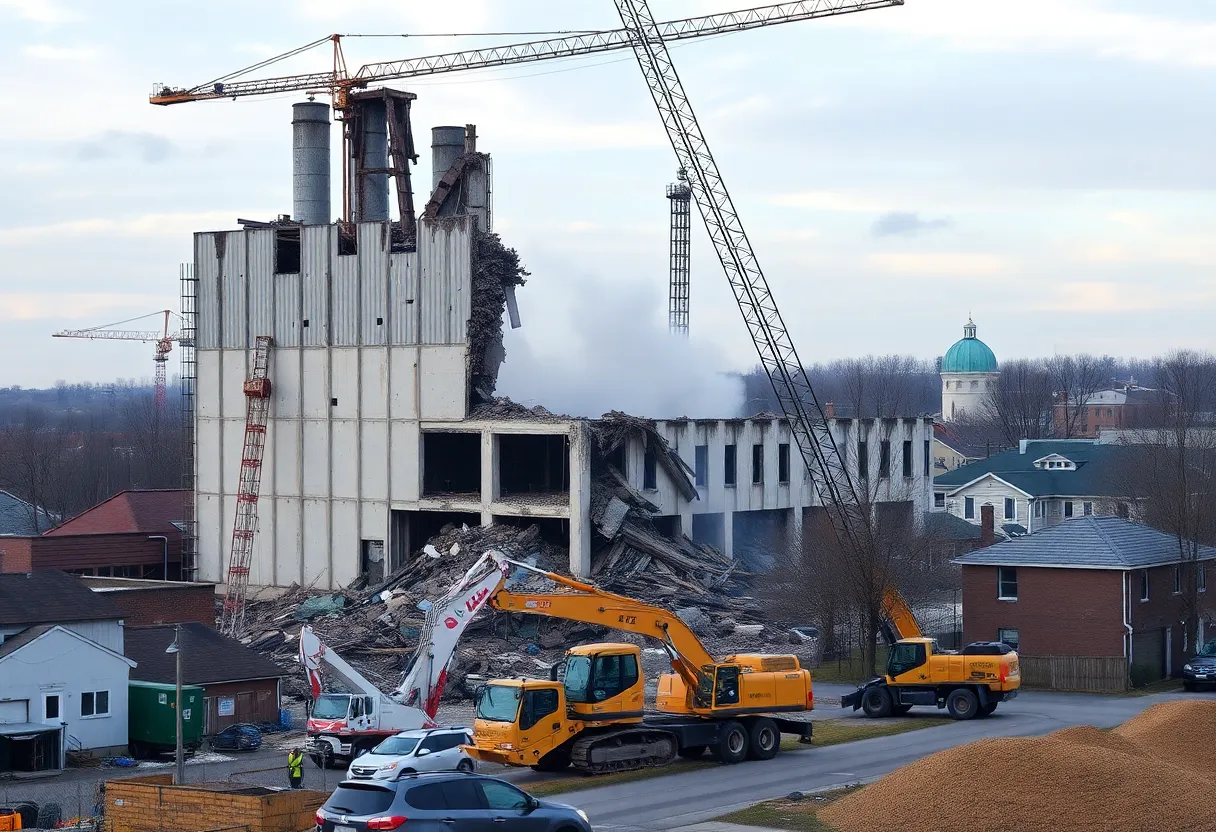
The Givaudan plant in Louisville’s Clifton neighborhood will begin demolition January 19, 2026, following a devastating explosion that claimed two lives and injured 11. The demolition is part of efforts to rezone the site for non-manufacturing uses as the community continues to recover. Dust control measures and specific disposal routes have been established to minimize disruption during the process.
Demolition of Givaudan Plant in Louisville’s Clifton Neighborhood to Begin Monday
LOUISVILLE, Ky. – Demolition of the Givaudan plant in Louisville’s Clifton neighborhood is set to commence on Monday, January 19, 2026. This follows a tragic explosion on November 12, 2024, that resulted in two fatalities and 11 injuries. The explosion also caused significant damage to nearby homes and businesses. Investigations determined that the blast was caused by a cooking vessel failure. A state investigation found that the issue leading to the explosion had been documented months prior. The wrecking permit has been issued, and the company plans to have equipment and contractors on-site beginning Monday. The demolition is expected to last approximately 40 days.
Demolition Details
- Work Hours: 7 a.m. to 5:30 p.m., Monday through Thursday. Weather permitting, work may extend to Fridays or weekends. Any changes to the schedule will be communicated to the Clifton Community Council.
- Disposal Route: The demolition debris will be transported via the following route:
- Right onto Payne Street
- Left onto Spring Street
- Left onto Lexington Road
- Left onto Grinstead Drive
- Merge onto Interstate 64
- Dust Control Measures: Particulate monitoring will be conducted along the fence line, with visual checks and misting as needed to control dust.
Future Plans for the Site
Following the demolition, efforts are underway to rezone the property for non-manufacturing uses. Louisville’s mayor has expressed support for this initiative, emphasizing the community’s desire for a different use of the site.
Background
The explosion at the Givaudan Sense Colour facility on November 12, 2024, was caused by a cooking vessel failure. The blast resulted in two fatalities and 11 injuries, and damaged nearby homes and businesses. Investigations revealed that the issue leading to the explosion had been documented months prior. The facility has since ceased operations, and demolition is proceeding as planned.
Community Impact
The Clifton neighborhood continues to recover from the explosion. Residents have expressed concerns about the future use of the site and are advocating for its rezoning to prevent future industrial use. The community remains engaged in discussions with city officials and Givaudan representatives to ensure the site’s redevelopment aligns with the neighborhood’s needs and safety considerations.
Key Features of the Demolition Plan
| Feature | Details |
|---|---|
| Start Date | January 19, 2026 |
| Work Hours | 7 a.m. to 5:30 p.m., Monday through Thursday; possible extension to Fridays or weekends |
| Demolition Duration | Approximately 40 days |
| Disposal Route | Payne Street → Spring Street → Lexington Road → Grinstead Drive → Merge onto I-64 |
| Dust Control Measures | Particulate monitoring along fence line; visual checks; misting as needed |
| Future Site Plans | Rezoning for non-manufacturing uses; support from Louisville’s mayor |
Frequently Asked Questions (FAQ)
When will the demolition of the Givaudan plant begin?
The demolition is scheduled to begin on Monday, January 19, 2026.
How long is the demolition expected to last?
The demolition is anticipated to last approximately 40 days.
What caused the explosion at the Givaudan plant?
The explosion was caused by a cooking vessel failure. A state investigation found that the issue leading to the explosion had been documented months prior.
What are the future plans for the Givaudan plant site?
Efforts are underway to rezone the property for non-manufacturing uses, with support from Louisville’s mayor.
How has the community been affected by the explosion?
The Clifton neighborhood continues to recover, with residents expressing concerns about the future use of the site and advocating for its rezoning to prevent future industrial use.
Deeper Dive: News & Info About This Topic
HERE Resources