

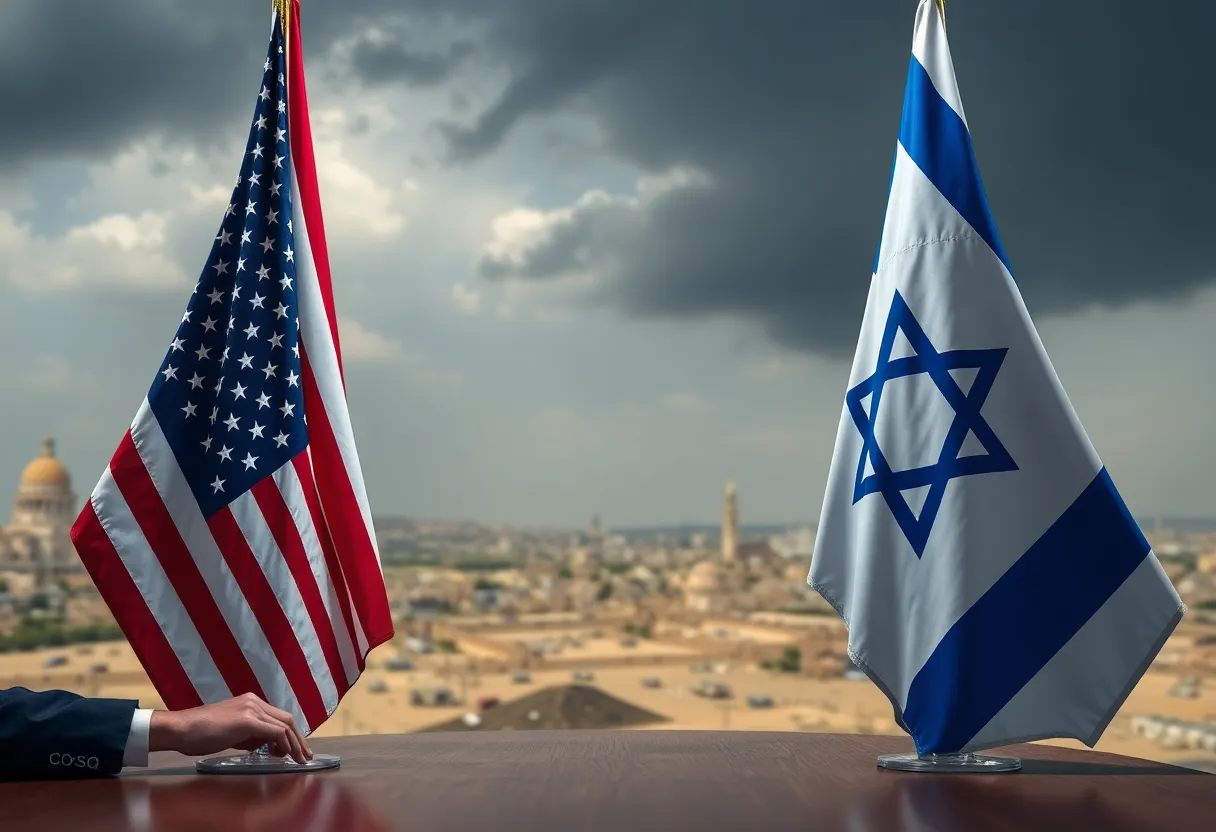
Palm Beach, Florida, December 30, 2025
President Donald Trump issued a strong warning to Iran during a recent meeting with Israeli Prime Minister Benjamin Netanyahu. Trump emphasized that any efforts by Iran to revive its nuclear program would provoke a significant military response from the U.S. This warning reflects ongoing tensions in the Middle East and highlights U.S. commitment to addressing perceived threats from Iran. The discussions also covered the stalled Gaza peace process and Netanyahu’s legal challenges, showcasing the complex dynamics of U.S.-Israel relations.
Trump Issues Warning to Iran Amid Netanyahu Visit
President’s bold stance highlights ongoing Middle Eastern tensions
Palm Beach, Florida – In a significant diplomatic interaction, President Donald Trump delivered a powerful warning to Iran on December 29, 2025, as he engaged in discussions with Israeli Prime Minister Benjamin Netanyahu at Mar-a-Lago. The president’s remarks underscored a strong U.S. commitment to confronting perceived threats from Iran, particularly regarding its nuclear ambitions, which could reshape dynamics not just in the region but also impact global security.
The backdrop of this meeting reflects not only the complex security challenges faced by Israel and its allies but also the determination of leaders like Trump and Netanyahu to maintain a strong stance against Iran’s potential military advancements. Such resolute action can be critical in fostering an environment where economic growth and stability can thrive, especially in a geopolitical landscape fraught with tension.
Trump’s Strong Stance Against Iranian Nuclear Development
During the meeting, President Trump emphasized that any attempt by Iran to reinstate its nuclear program would provoke “very powerful” military action from the United States. He expressed concerns that Iran may be advancing its capabilities at undisclosed sites and noted that previous U.S. airstrikes against key nuclear facilities in June may not have sufficed to deter further development. Moreover, Israeli officials have echoed these worries, highlighting the risks associated with Iran’s attempts to bolster its long-range missile stockpiles, which poses a direct threat to Israel.
Iran’s Response to U.S. Warnings
The Iranian leadership, represented by President Masoud Pezeshkian, has responded defiantly, claiming that any U.S. attack would garner a robust and discouraging counter-response. Pezeshkian reaffirmed Iran’s position of not enriching uranium and expressed a willingness to engage in negotiations despite the escalating tensions. He accused the U.S., Israel, and European entities of heightening instability in Iran, which has not been confirmed by international agencies as advancing a nuclear weapons program since 2003.
Discussion on Gaza and Regional Peace Efforts
The meeting also delved into the stalled Gaza peace process, pinpointing the necessity for disarming Hamas, which continues to pose a challenge to peace efforts in the region. Discussions centered on the importance of rebuilding Gaza under international supervision, suggesting that U.S. and Israeli leadership believes a collaborative approach can yield better outcomes for peace and stability.
Netanyahu’s Ongoing Legal Challenges
Amidst these security discussions, President Trump revisited the contentious topic of Netanyahu’s ongoing corruption trial, calling for a pardon for the Israeli leader. Trump commended Netanyahu’s leadership during wartime, reflecting a dynamic alliance that continues to navigate through both domestic and international pressures.
Future Implications for U.S.-Israel Relations
The meeting at Mar-a-Lago not only highlights the complexities surrounding U.S.-Israel relations but also the intertwining of military strategy with economic initiatives. With both leaders adopting a firm stance on Iran and a commitment to refining regional policies, local entrepreneurs, and small businesses may find new opportunities for growth in a more stable geopolitical climate, reaffirming the belief that strong leadership can foster economic resilience and innovation.
Conclusion
The developments from President Trump’s meeting with Prime Minister Netanyahu signal a resolute approach to addressing threats from Iran while promoting stability in the region. Local communities in areas like Louisville can draw inspiration from such strong leadership and the potential for economic growth that follows. As these international discussions unfold, it becomes increasingly vital for residents to stay engaged in supporting local entrepreneurship and fostering a resilient economy.
Frequently Asked Questions (FAQ)
What did President Trump warn Iran about during his meeting with Prime Minister Netanyahu?
President Trump warned Iran that the United States would take “very powerful” military action if Iran attempts to rebuild its nuclear program. He expressed concerns that Iran might be developing weapons at new sites, despite earlier U.S. airstrikes in June that targeted key nuclear facilities in Fordow, Natanz, and Isfahan. Israeli officials have also raised alarms about Iran’s efforts to replenish its long-range missile stockpile, which could pose a threat to Israel.
How did Iranian President Masoud Pezeshkian respond to President Trump’s warning?
In response to President Trump’s warning, Iranian President Masoud Pezeshkian declared that any attack on Iran would be met with a harsh and discouraging response. He reiterated Iran’s position that it is not enriching uranium and remains open to negotiations, despite rising tensions. Pezeshkian accused the U.S., Israel, and Europe of destabilizing Iran and acknowledged an ongoing conflict. The situation echoes historical nuclear concerns, though international agencies have not confirmed Iran advancing a weapons program since 2003.
What other topics were discussed during the meeting between President Trump and Prime Minister Netanyahu?
During the meeting, President Trump and Prime Minister Netanyahu discussed the stalled Gaza peace process, emphasizing the need for disarmament of Hamas and the rebuilding of Gaza under international supervision. Trump also renewed calls for Netanyahu to be pardoned amid his ongoing corruption trial and praised him as a wartime leader. Netanyahu awarded Trump the Israel Prize, a symbolic break from tradition, and the two leaders presented a united front despite mounting international criticism and internal political pressures facing Netanyahu.
Key Features of the Meeting
| Topic | Details |
|---|---|
| U.S. Warning to Iran | President Trump warned Iran of potential military action if it attempts to rebuild its nuclear program, expressing concerns over new sites and missile stockpiles. |
| Iran’s Response | President Pezeshkian declared that any attack on Iran would be met with a harsh response, reiterating Iran’s position on uranium enrichment and openness to negotiations. |
| Gaza Peace Process | Discussions focused on the need for Hamas disarmament and rebuilding Gaza under international supervision, with challenges in the peace process highlighted. |
| Netanyahu’s Legal Situation | President Trump renewed calls for Netanyahu’s pardon amid his ongoing corruption trial and praised him as a wartime leader, with Netanyahu awarding Trump the Israel Prize. |
Deeper Dive: News & Info About This Topic
HERE Resources